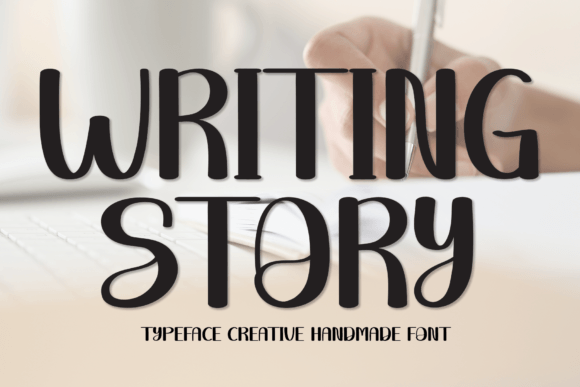
How Writing Story Font Transformed My Brand’s Visual Identity
It was a quiet Tuesday morning when I sat at my kitchen table, staring at the packaging for my new line of handcrafted candles. The design felt off—too generic, too safe. I wanted something that would make my brand stand out, something that would whisper “luxury” and “care” to anyone who held it in their hands. That’s when I discovered Writing Story, a font from Script Amp that had everything I was looking for.
A Font with Personality
Writing Story is more than just a typeface—it’s a mood. Its flowing curves and elegant strokes give it a soft, approachable feel, yet it still carries an air of sophistication. It reminded me of handwritten letters, but with a polish that makes it perfect for professional use. This script font has a warmth that feels personal, like a friend’s note, but it also has the clarity needed for branding.
I immediately saw how this font could bring my candle labels to life. Instead of using a basic sans serif, which felt too cold, or a blocky serif, which felt too formal, Writing Story gave my product a voice. It felt like the perfect balance between creative and clean.
From Labels to Logos: A Font That Works Everywhere
The first thing I did was redesign my candle jar labels. I used Writing Story for the product names and paired it with a clean sans serif for the descriptions. The contrast made everything pop, and the result looked far more cohesive than anything I’d tried before. But it didn’t stop there.
I started applying Writing Story across all my marketing materials. On my website, I used it for headlines and call-to-action buttons. In my Instagram posts, I used it as a watermark and for captions. Even my thank-you cards now have a touch of this font. It’s become the heartbeat of my brand’s visual identity.
Whether it’s on a small label, a large banner, or a digital ad, Writing Story adapts well. It works especially well for headlines, logos, and display text. It adds a decorative flair without overwhelming the message. For smaller text, like product details or social media captions, I pair it with a simpler font to keep readability high.
Why Typography Matters for Small Businesses
I used to think typography was just about choosing the right font size. But after switching to Writing Story, I realized how much it affects the way people see your brand. First impressions are everything, and the right font can make your business look more professional, trustworthy, and memorable.
Take my café menu, for example. Before Writing Story, the fonts were inconsistent. Some items used one style, others another. It felt cluttered. Now, the menu uses Writing Story for dish names and a clean sans serif for descriptions. It looks polished, and customers seem to spend more time reading it. That’s not just aesthetics—it’s engagement.
Typography also plays a big role in brand perception. A consistent font choice helps build recognition. When people see Writing Story on my packaging, social media, and website, they instantly associate it with my brand. That kind of consistency builds trust and loyalty over time.
Practical Tips for Using Writing Story
If you’re thinking about using Writing Story, here are a few things to keep in mind:
- Readability is key: While Writing Story is beautiful, it’s important to use it in a way that doesn’t sacrifice legibility. Avoid using it for long paragraphs or small text sizes where it might be hard to read.
- Font pairing: Pair Writing Story with a complementary font. I love using it with a modern sans serif for headings and body text. It creates a nice contrast while keeping things balanced.
- Check file formats: Make sure the font supports the formats you need, like .ttf, .otf, or web fonts. Also, confirm whether it includes alternate characters, ligatures, and different weights if you plan to use it extensively.
- Commercial use: Always check the licensing agreement to ensure you can use the font for your intended purpose, whether it’s on product packaging, digital downloads, or client work.
For someone like me, who runs a small business from home, Writing Story has been a game-changer. It’s helped me create a more professional, consistent, and recognizable brand. And the best part? It’s not just about looking good—it’s about feeling good about what you put out into the world.